
Today I’m bringing you a true takeout classic that is so incredibly easy to master at home, you’ll wonder why you ever ordered in! This Chicken Chow Mein is an absolute game-changer for busy weeknights, delivering that perfect balance of savory-sweet sauce, tender chicken, and crisp-tender veggies, all hugging those irresistible noodles. It’s fresh, flavorful, ready in about 30 minutes, and trust me, your whole family is going to love digging into this bowl of noodle goodness!
Why You’ll Love This Recipe
- Lightning Fast: From prep to plate, this recipe is ready in just 30 minutes, making it the perfect solution for those chaotic weeknights.
- A World of Texture: It combines tender, marinated chicken, al dente noodles, and perfectly crisp vegetables (hello, colorful bell pepper!) for a satisfying bite every single time.
- Better Than Takeout Flavor: The homemade sauce, featuring savory soy and umami-rich oyster sauce, gives you that authentic, deep flavor that’s totally customizable to your taste.
- Wok or Skillet Friendly: No fancy equipment needed! You can achieve that glorious stir-fry char using a traditional wok or just your largest skillet.
Ingredients
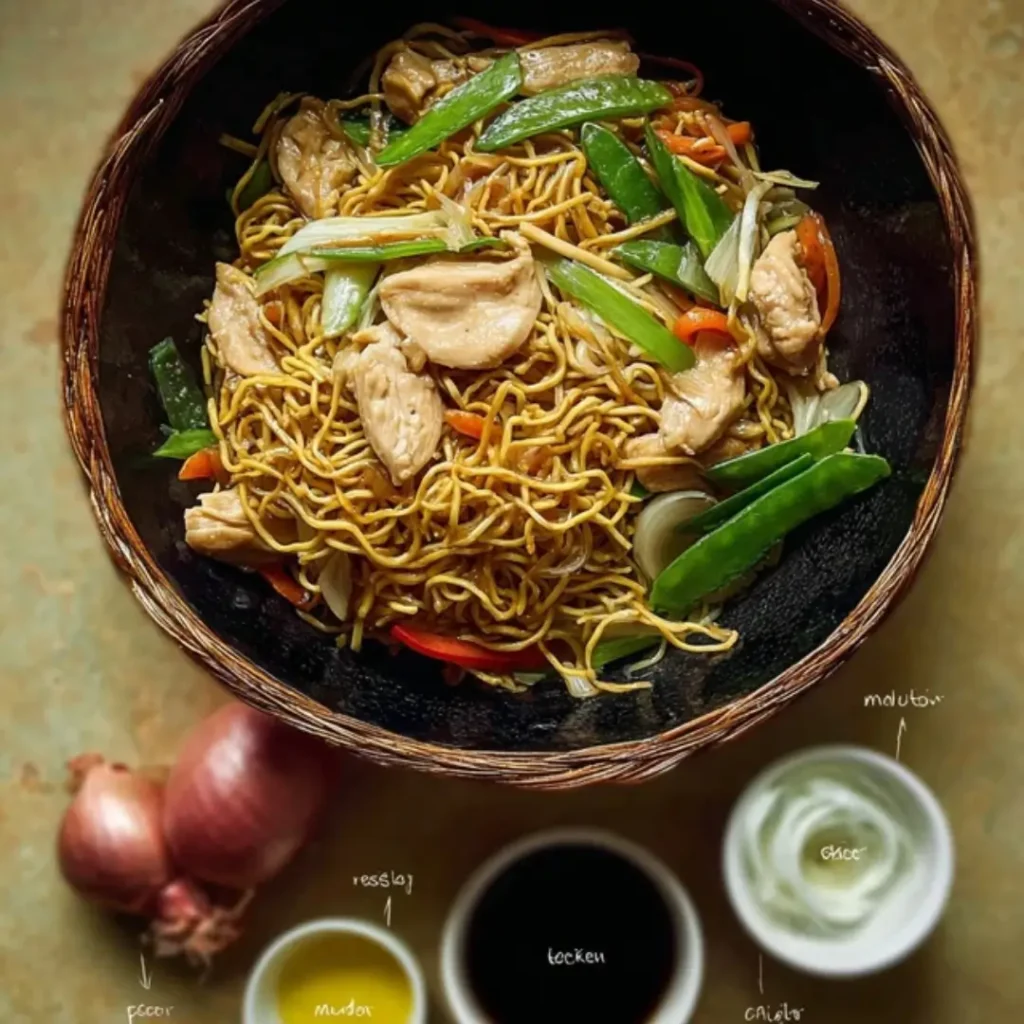
All you need for this spectacular Chicken Chow Mein Recipe is a little slicing, dicing, and about 30 minutes! Yes, it’s that easy. But first, let’s gather up these key ingredients:
- Chow Mein Noodles or Thin Egg Noodles: These are the backbone of the dish! They provide the perfectly chewy texture that soaks up the savory sauce. Don’t overcook them!
- Boneless, Skinless Chicken Breasts: We slice these thin to maximize the surface area for the marinade, which ensures they cook fast and stay incredibly tender.
- Soy Sauce: The essential umami and salt component for both the quick marinade and the final sauce. Use low-sodium to better control the seasoning.
- Oyster Sauce: This is a key ingredient for authentic chow mein flavor, adding a rich, savory-sweet, and deep umami punch to the final dish.
- Sesame Oil: Used sparingly, a small amount adds a wonderfully toasted, nutty aroma that brightens the entire dish, especially when added to the sauce at the end.
- Vegetable Oil: A neutral, high-smoke-point oil essential for high-heat stir-frying the chicken and vegetables.
- Garlic: The foundational aromatic—don’t skip the fresh, minced garlic for a pungent, savory base.
- Onion: Adds a subtle sweetness and aromatic depth when sautéed with the garlic.
- Shredded Cabbage, Carrot (Julienned), and Red Bell Pepper (Sliced): This vibrant veggie mix provides color, crunch, and essential nutrients. Keep them crisp-tender!
- Green Onions: Stirred in right at the end, they provide a lovely fresh, sharp, and oniony garnish.
- Low-Sodium Chicken Broth: Thins out the rich sauces and helps bind all the ingredients together into a cohesive dish.
- Cornstarch (Optional): This is your secret weapon! If you prefer a thicker, glossy sauce that beautifully coats the noodles, whisk this into the liquid mixture.
- Salt and Pepper: For seasoning the chicken and adjusting the final flavor.
Note: The complete list of ingredients with specific measurements, plus preparation and nutritional information, can be found right under this article in the recipe card.
How to Make the Chicken Chow Mein
Get your wok fired up! Stir-frying is a quick process, so make sure you have all your ingredients prepped and ready to go.
Step 1: Marinate the Chicken
In a medium bowl, toss those thinly sliced chicken pieces with 1 tablespoon of soy sauce and a pinch of pepper. Give it a good mix, then set it aside to soak up that savory flavor for at least 10 minutes. This quick marination is critical for maximum flavor!
Step 2: Cook the Noodles
Bring a pot of water to a boil and cook your chow mein or egg noodles according to the package directions until they are al dente (slightly firm). Drain them immediately, give them a quick rinse with cold water to stop the cooking, and set them aside. This ensures they don’t stick together!
Step 3: Whisk Together the Sauce
In a small, separate bowl, whisk together the remaining soy sauce, oyster sauce, sesame oil, and chicken broth. If you’re a fan of a sauce that really clings to the noodles, now is the time to whisk in that cornstarch until it’s fully dissolved.
Step 4: Cook the Chicken
Heat your vegetable oil in a large wok or skillet over medium-high heat. Add the marinated chicken and stir-fry it for 4–5 minutes until it’s completely cooked through and beautifully golden. Remove the chicken from the pan and set it aside—we’ll bring it back in a minute!
Step 5: Stir-Fry the Aromatics and Veggies
If the pan looks dry, add a tiny bit more oil. Drop in the minced garlic and sliced onion, and sauté for just 1 minute until they are wonderfully fragrant. Next, toss in the cabbage, carrots, and bell pepper. Stir-fry these vibrant veggies for 2–3 minutes. The goal here is crisp-tender, not soggy!
Step 6: Combine and Finish the Dish
Return the cooked chicken to the pan. Add the drained noodles and the sauce mixture. Give everything a good, quick toss to combine, making sure the sauce is evenly coating every noodle strand. Cook until the dish is heated through and the sauce (if using cornstarch) has thickened and turned glossy.
Step 7: Serve Immediately
Just before you take it off the heat, stir in the chopped green onions. This gives it a final, fresh burst of flavor and color. Serve hot and enjoy the best homemade chow mein you’ve ever had!
Pro Tips for Making the Recipe
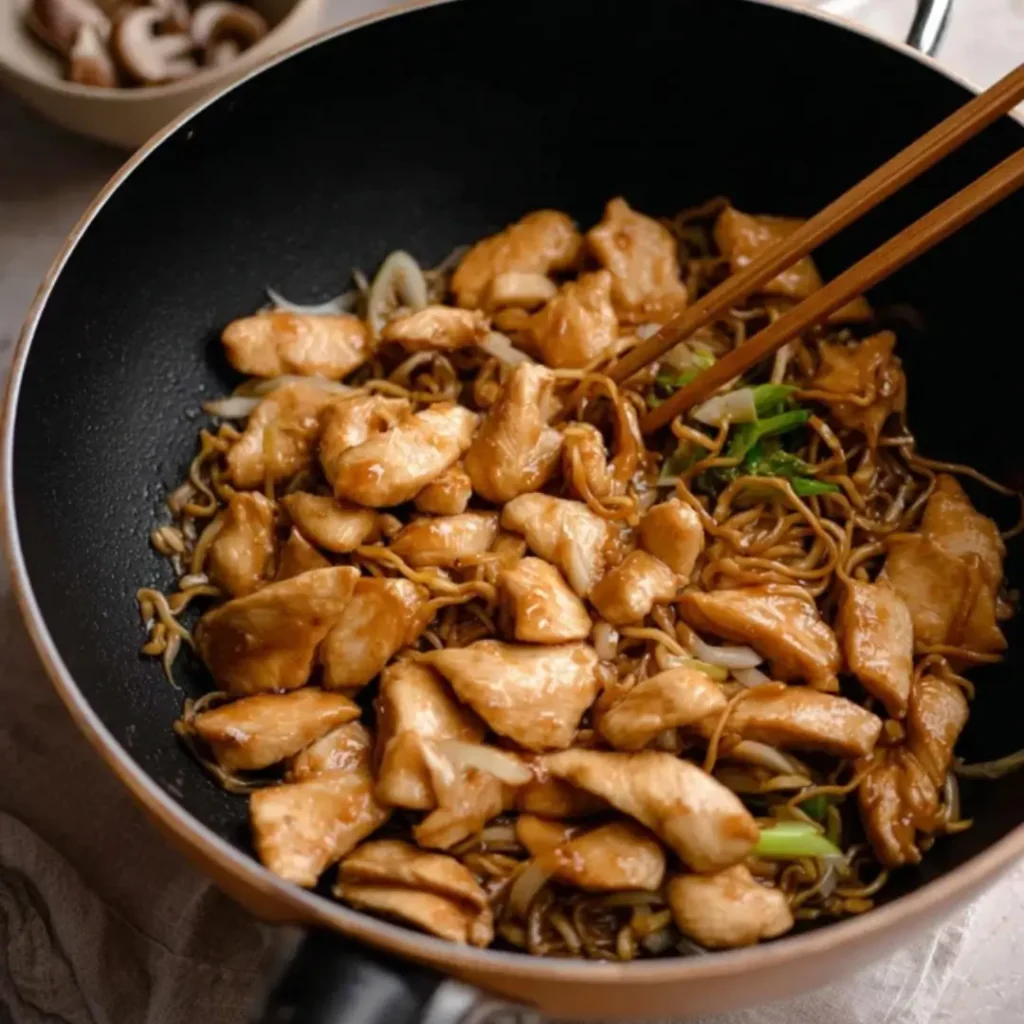
- Prep is Everything: In stir-frying, things move fast! Have all your vegetables sliced and your sauce mixed before you turn on the heat. This is known as mise en place and is the key to stir-fry success.
- Don’t Overcrowd the Wok: If you have a smaller pan, cook the chicken in two batches. Overcrowding drops the pan temperature, which leads to steaming instead of sizzling—and nobody wants steamed chow mein!
- High Heat is Your Friend: Use medium-high to high heat to get that signature slightly smoky, “wok hei” flavor and ensure the veggies stay crisp.
- Adjust the Sauce: Taste the sauce before you add the noodles! Need more savory depth? Add a dash more soy sauce or oyster sauce. Want a little heat? A tiny splash of chili garlic sauce would be unreal.
How to Serve
This Chicken Chow Mein is a complete meal all on its own, but if you want to make it a full feast, here are some great pairing ideas:
- Crisp Side: Serve alongside a simple Asian cucumber salad or a bowl of crunchy, salted edamame.
- Appetizer Starter: Pair with homemade or store-bought spring rolls or potstickers for the ultimate takeout experience at home.
- Extra Crunch: Top your finished bowl with a sprinkle of toasted sesame seeds or a dash of chili oil for an extra layer of texture and flavor.
Make Ahead and Storage
Storing Leftovers
Place any leftover chow mein in an airtight container and store it in the refrigerator for up to 3 days.
Freezing
It’s generally best to avoid freezing noodle stir-fries, as the noodles and vegetables can become mushy upon thawing. This recipe is so fast, you should plan to enjoy it fresh!
Reheating
To reheat, place the chow mein in a skillet or wok over medium heat and add a tablespoon or two of water or chicken broth. Stir-fry gently for a few minutes until it is warmed through. This moisture helps revive the noodles and prevents them from drying out. You can also use the microwave, but the stovetop retains a better texture!
FAQs
1. Is it okay to use a different type of noodle?
Absolutely! While chow mein noodles give the dish its classic identity, you can easily substitute with lo mein noodles (they are a bit thicker) or even spaghetti in a pinch! Just be sure to cook whatever noodle you choose according to its package instructions until al dente before adding it to the stir-fry. The key is to keep the noodles slightly firm so they hold up when tossed in the sauce.
2. How can I make this dish spicier?
It’s easy to kick up the heat! For a mild warmth, simply add a pinch of red pepper flakes to the vegetables while they are stir-frying. For a more intense, fiery flavor, stir in a teaspoon of Sriracha or chili garlic sauce to the sauce mixture in Step 3, or drizzle some chili oil over the finished dish just before serving.
3. What can I substitute for the oyster sauce?
If you need a substitute for oyster sauce, the best option for a vegetarian dish is vegetarian stir-fry sauce or mushroom soy sauce, which provide a similar umami depth. If the only concern is the oyster component, a mix of Hoisin sauce and soy sauce can work, though Hoisin is often sweeter, so taste and adjust as you go!
4. Can I add other vegetables to this recipe?
This recipe is wonderfully versatile, and I highly encourage you to use what you have! Great additions include sliced mushrooms, chopped bok choy (add them with the other veggies), or a handful of bean sprouts (toss them in at the very end for maximum crunch). Stir-frying is the perfect opportunity to clean out your veggie drawer!

Chicken Chow Mein
Ingredients
Equipment
Method
- Cook noodles according to package directions, drain, and set aside.
- In a small bowl, whisk together soy sauce, oyster sauce, hoisin sauce, sesame oil, cornstarch, and chicken broth. Set aside.
- Heat 1 tablespoon of oil in a wok over medium-high heat. Add sliced chicken and stir-fry until cooked through, about 4–5 minutes. Remove from pan and set aside.
- Add remaining oil, then stir-fry onion, carrot, and cabbage for 2–3 minutes until crisp-tender. Add garlic and cook 30 seconds more.
- Return chicken to the pan along with noodles and sauce. Toss everything together until evenly coated and heated through, about 2 minutes.
- Garnish with green onions and serve hot.