
If you’ve been looking for a super simple way to dive into the world of fermented foods, this is it! These fermented jalapeños are crunchy, tangy, delightfully spicy, and loaded with amazing beneficial bacteria. Using just salt, water, and a few aromatics, we’re transforming humble peppers into an electrifying topping that adds a punch of bright, savory flavor to almost any meal. Plus, the DIY aspect is incredibly rewarding and a fun way to use those fresh peppers when they’re in season!
Why You’ll Love This Recipe
- Ultimate Crunch Factor: The fermentation process keeps the jalapeños wonderfully crunchy—no more soft, sad peppers!
- Flavor Boost: We’re adding incredible aromatic depth with whole spices, creating a complex tanginess that store-bought varieties just can’t match.
- Gut Health Hero: Fermented foods naturally contain probiotics, which are fantastic for supporting your gut flora. Eat your way to health, my friend!
- So Simple, It’s Silly: If you can mix salt and water, you can make these. Seriously, the hardest part is waiting for them to finish!
Ingredients
All you need for this simple ferment is a few pantry staples, some fresh peppers, and a little bit of patience (which is always the toughest ingredient!). But first, let’s gather our flavorful essentials:
- Fresh Jalapeños: The star of the show! We slice these into rings to maximize surface area, allowing the brine to work its tangy magic.
- Garlic: Smashed lightly to release its pungent, aromatic oils into the brine for a deeper, savory flavor base.
- Water & Sea Salt: Together, they form the brine—the magical environment where fermentation happens. It’s crucial that you use non-iodized salt!
- Whole Black Peppercorns: Adds a subtle warmth and earthy spice that complements the heat of the jalapeño.
- Bay Leaf: Contributes a lovely, slightly herbal, and floral undertone to the finished product.
- Coriander Seeds: These little powerhouses bring a bright, citrusy note that cuts through the heat beautifully.
- Fresh Dill: Totally optional, but it offers a burst of fresh, herbaceous goodness that pairs so well with the tangy brine.
Note: The exact measurements and quantities for these ingredients will be found in the complete recipe card, located right beneath this article.
How to Make the recipe
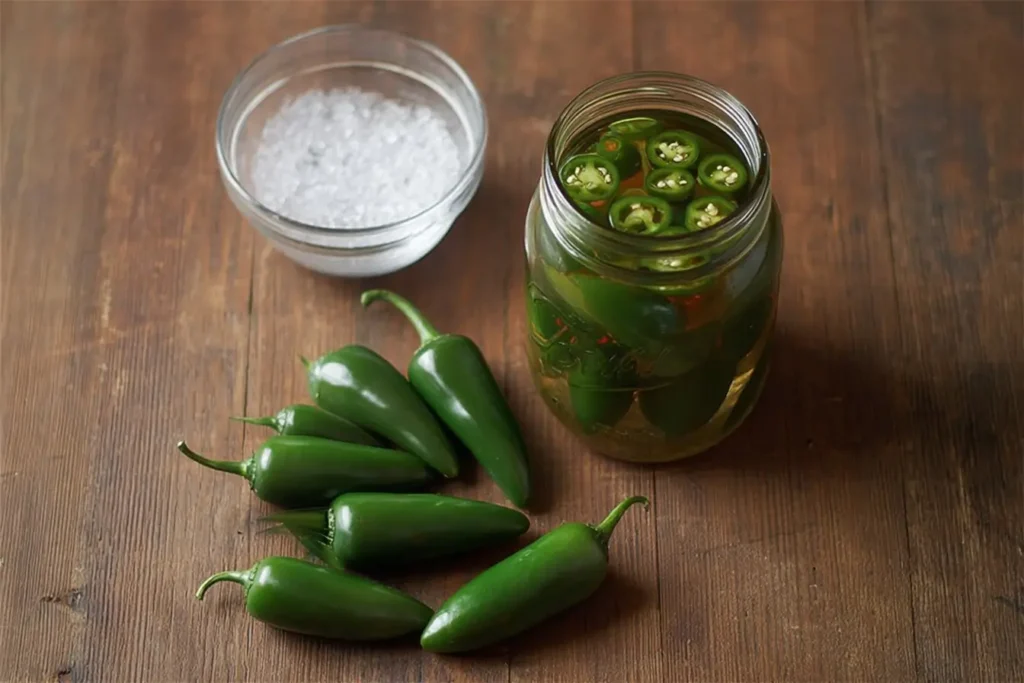
It’s time to get your hands a little spicy and start this simple process!
Step 1: Prep and Pack Your Jar
Grab a clean jar (sanitizing is a great idea!). Tightly pack your sliced jalapeños inside, layering in the smashed garlic, peppercorns, bay leaf, coriander seeds, and the sprig of dill if you’re using it. Packing them tight helps keep them submerged later on.
Step 2: Mix the Magic Brine
In a separate bowl, combine your water and sea salt. Give it a good whisk until the salt is completely dissolved. This salty solution is what will keep the bad bacteria out and let the good bacteria thrive!
Step 3: Brine Time!
Carefully pour the brine mixture over the packed jalapeños. Make sure every single pepper slice is submerged, and check that you’ve left about 2.5 cm (an inch) of space between the brine and the top of the jar—this is called headspace, and it gives the fermenting gases room to build.
Step 4: Keep Them Submerged
This is a critical step! Use a fermentation weight or another small, food-safe item (like a small glass cup) to keep those beautiful peppers below the brine. If they float up and are exposed to the air, mold can form. We want tang, not fuzz!
Step 5: Seal and Wait
Secure your jar with an airlock lid, which allows gases out without letting air in. If you don’t have one, just close a regular lid very loosely. This allows the gas build-up (you’ll see bubbles!) to escape. Now, the waiting game begins.
Step 6: Ferment and Monitor
Place your jar in a cool, dark spot—room temperature is ideal. Let it ferment for 5 to 10 days. Check it daily to ensure the peppers haven’t shifted and are still fully submerged.
Step 7: The Flavor Test
On day 5, give one a little taste! If it’s tangy and fizzy enough for your liking, you can move it to the fridge. The cold temperature will dramatically slow the fermentation process, preserving that perfect flavor profile.
Pro Tips for Making the Recipe
- Mind the Salt: Always, always use non-iodized salt (like sea salt or kosher salt). Iodine can interfere with the beneficial bacteria we need for a proper ferment.
- Temperature Control is Key: Aim for that sweet spot of 18–22°C (65–72°F). If it’s too cold, it will ferment very slowly. If it’s too hot, it can ferment too quickly and potentially lead to spoilage.
- Wear Gloves: Unless you love the feeling of burning hands, I highly recommend wearing kitchen gloves while slicing those jalapeños. Pepper oils are intense!
How to Serve

These crunchy, tangy, spicy slices are so versatile! Here are a few ways to use up your fresh batch:
- Taco Topping: They are non-negotiable on any taco, burrito, or quesadilla.
- Sandwich Game: Elevate a simple deli sandwich or a grilled cheese.
- Brunch Upgrade: Finely chop them and mix them into deviled egg filling or use them as a crunchy garnish for scrambled eggs.
- Nachos and Dips: Sprinkle them liberally over nachos, or mix some brine into hummus or guacamole for a zesty kick.
Make Ahead and Storage
Once you have that perfect level of tanginess, storing them correctly is the next step to enjoying them for months to come!
Storing Leftovers
Once they hit your desired flavor, move the jar to the refrigerator. The cool temperature slows down the fermentation. They will keep, still submerged in their brine, for 3 to 6 months or even longer!
Freezing
We don’t recommend freezing these. Freezing will destroy the texture and turn your beautiful, crunchy slices into mushy ones. Keep them in the fridge to maintain that great bite!
Optimal Flavor
The flavor will continue to evolve subtly in the refrigerator, becoming deeper and more complex over time. Just ensure the peppers remain below the brine for maximum longevity and crunch.
FAQs
- How do I know if my ferment has gone bad?
A bad ferment will have fuzzy mold (usually blue, green, or black) or a distinctly rotten smell. If you see a thin, white, powdery layer on top of the brine, that’s likely Kahm yeast, which is generally harmless. You can skim it off. If it smells sour and yeasty (like vinegar or beer), that’s good! If it smells rancid or putrid, discard it.
- Can I use regular table salt?
No, you should only use non-iodized salt, such as sea salt or kosher salt. Regular table salt contains anti-caking agents and iodine that can inhibit the growth of the beneficial Lactobacillus bacteria, which is what we need for a successful and safe ferment.
- What is the fizzing and bubbling I see?
That fizzing and bubbling is a wonderful sign that your fermentation is successful! It’s carbon dioxide gas being released as the bacteria consume the natural sugars in the peppers. This is why you must use an airlock or keep the lid loosely sealed to let that gas escape (or you could have a little explosion!).
- Do I have to keep the peppers submerged?
Yes, keeping the peppers submerged is the single most important rule of home fermentation! When the peppers are exposed to oxygen, they are susceptible to mold growth. Always use a weight or pack them tightly enough so the brine covers everything entirely.

Fermented Jalapenos – A Simple Homemade Guide
Ingredients
Equipment
Method
- Pack sliced jalapenos into a clean jar, layering with garlic, peppercorns, bay leaf, coriander seeds, and dill.
- Mix water and sea salt until fully dissolved to make a brine.
- Pour the brine over the jalapenos, ensuring they are fully submerged. Leave at least 2.5 cm headspace.
- Weigh the jalapenos down with a fermentation weight to keep them submerged.
- Seal with an airlock lid or loosely with a regular lid to allow gases to escape.
- Place in a cool, dark area (18–22°C) and ferment for 5–10 days, checking daily.
- Taste after day 5 and move to the refrigerator once desired tanginess is reached.
- Store chilled and enjoy on tacos, sandwiches, salads, and more.