
If you’re craving those ultra-savory, slightly sweet, and unbelievably slurpable noodles you get at your favorite Japanese steakhouse, you are in luck! Today I’m bringing you a true restaurant-quality dish you can whip up right in your own kitchen in under 30 minutes. These Hibachi Noodles are coated in a glorious blend of garlic, soy, and a hint of sweetness, tossed with tender veggies, and will absolutely satisfy that takeout craving. Trust me, this one’s a game-changer for weeknight dinner rotation!
Why You’ll Love This Recipe
- Faster Than Takeout: With just 10 minutes of prep, you can have these flavor-packed noodles ready on the table quicker than ordering delivery.
- Irresistible Flavor Bomb: The combination of savory sauces, toasted sesame, and caramelized brown sugar creates that authentic, addictive hibachi taste.
- Perfectly Customizable: This recipe is a fabulous base! Feel free to toss in your favorite protein like chicken, shrimp, or tofu to make it a complete meal.
- Slurpable Comfort Food: There’s just something inherently cozy about a big bowl of glossy, satisfying noodles. This is comfort food with a major flavor punch!
Ingredients
All you need for this Hibachi Noodles Recipe are some pantry staples and 15 minutes of cooking time! But first, gather up these essential ingredients:
- Lo Mein Noodles or Thick Spaghetti: The base of our dish! Lo Mein is traditional, but thick spaghetti works perfectly to give you that classic hearty texture.
- Butter: This is the secret to that rich, authentic hibachi flavor. It adds a delicious richness and sheen to the final dish.
- Olive Oil: Used to sauté the garlic and vegetables, preventing the butter from burning.
- Garlic: Adds a crucial layer of aromatic, savory flavor that is key to all hibachi cooking.
- Soy Sauce: Provides the necessary salty, umami backbone for the sauce. Use low-sodium if you prefer less salt!
- Teriyaki Sauce: Gives the sauce a lovely balance of sweet and tangy flavor.
- Oyster Sauce: While optional, it truly deepens the savory flavor and adds a fantastic thickness and glaze to the sauce—it’s worth it!
- Sesame Oil: A small amount goes a long way! It adds a toasted, nutty aroma that brings all the Asian flavors together.
- Brown Sugar: Essential for balancing the savory and salty components, giving the noodles that signature caramelized, sweet edge.
- Black Pepper: Just a touch to enhance the overall savory profile.
- Green Onions (Scallions): Added at the very end to provide a fresh, sharp bite and beautiful color contrast.
- Shredded Carrots: Adds a bit of sweetness, texture, and a pop of orange. They soften up nicely during the quick stir-fry.
- Cabbage: Thinly sliced cabbage gives the dish volume and that satisfying crunch and freshness.
- Sesame Seeds: Our finishing touch! Used purely for garnish and a nutty crunch when serving.
Note: The exact measurements and quantities for these ingredients will be found right under this article in the printable recipe card!
How to Make the Hibachi Noodles
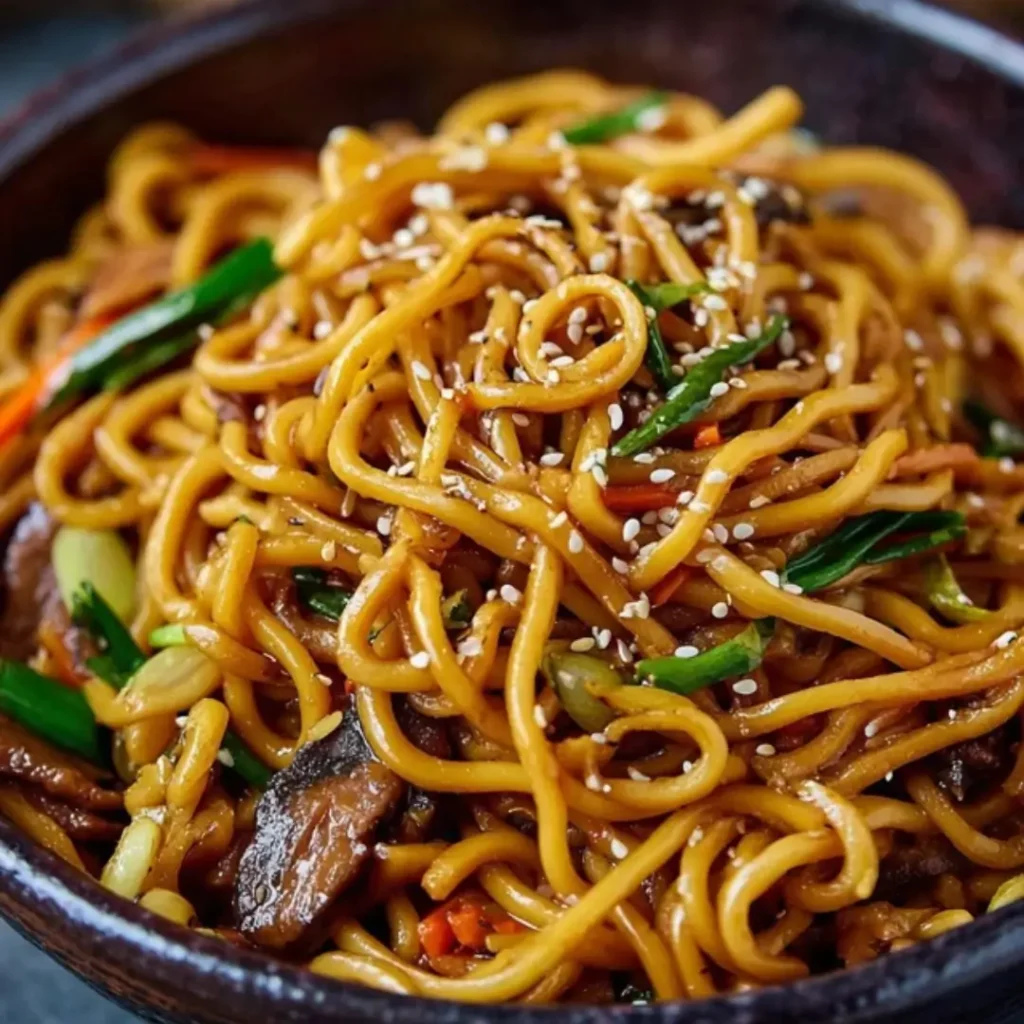
This process moves fast, just like a chef on a hibachi grill! Get everything prepped before you start cooking.
Step 1: Cook the Noodles
First things first: cook your noodles! Follow the package instructions for your chosen lo mein or spaghetti. Make sure they are cooked al dente—slightly firm—since they will continue to cook briefly in the skillet. Drain them well and set aside.
Step 2: Sauté the Aromatics and Veggies
Heat your olive oil in a large skillet or wok over medium-high heat. Once shimmering, toss in the minced garlic and sauté for just 60 seconds until fragrant. Next, add the shredded carrots and thinly sliced cabbage. Stir-fry for 3-4 minutes, allowing the vegetables to slightly soften and get just a little tender-crisp.
Step 3: Add the Hibachi Base
Once the veggies are slightly softened, drop the butter into the skillet. Let it melt, stirring continuously, to coat all the vegetables. This step infuses everything with that signature buttery hibachi richness.
Step 4: Whisk the Secret Sauce
While the butter is melting, quickly whisk together your sauce components in a small bowl: soy sauce, teriyaki sauce, oyster sauce, sesame oil, brown sugar, and black pepper. Whisk until the brown sugar is mostly dissolved—that’s the magic potion!
Step 5: Toss and Coat the Noodles
Now, add the drained, cooked noodles to the skillet. Pour that incredible sauce mixture right over the top. Toss everything together, using tongs, until every strand of noodle is fully coated in that beautiful, glossy, brown sauce and is heated through.
Step 6: Finish and Serve
Finally, add the sliced green onions to the mix and cook for one to two minutes more, just until they wilt slightly. Serve the noodles immediately while they are piping hot, and don’t forget to sprinkle those sesame seeds right over the top!
Pro Tips for Making the Recipe
- Wok vs. Skillet: If you have a wok, use it! High heat and a large surface area are perfect for stir-frying. If not, the largest skillet you own works great, just make sure not to overcrowd it.
- Toss, Don’t Stir: When adding the noodles and sauce, use tongs to lift and toss the ingredients rather than stirring with a spoon. This helps coat the noodles evenly without breaking them up.
- Make it Spicy: If you like heat, whisk a teaspoon of Sriracha or a few drops of chili oil into the sauce mixture before adding it to the skillet.
- Noodle Prep: Rinsing your cooked noodles briefly in cold water before draining and setting aside can help prevent them from sticking together while you prep the other ingredients.
How to Serve
These Hibachi Noodles are a star on their own, but they also pair beautifully with other Japanese steakhouse classics!
- Protein Pairings: Serve them alongside some grilled steak strips, pan-seared chicken breast, or sautéed shrimp to make it a full Hibachi experience.
- Sauce Dip: A little bit of Yum Yum Sauce on the side is the perfect creamy dipper for these noodles!
- As a Side: They are absolutely ideal as a side dish for almost any Asian-inspired main course, like potstickers or spring rolls.
Make Ahead and Storage
These noodles are best enjoyed fresh, but leftovers are still ridiculously good!
Storing Leftovers
Place any cooled leftovers in an airtight container and store them in the refrigerator for up to 3 days.
Freezing
Freezing cooked noodles is generally not recommended, as they can lose their texture and become mushy upon thawing. It’s best to enjoy this recipe fresh or as leftovers within a few days!
Reheating
To reheat, place the noodles in a non-stick skillet over medium heat and add a splash of water or broth (about 1-2 tablespoons). Toss constantly until they are heated through. You can also use the microwave, but the skillet yields better results.
FAQs
1. Can I add other vegetables to this recipe?
Absolutely! This recipe is incredibly versatile, so feel free to load up the veggies. You can easily toss in sliced mushrooms, thin strips of bell pepper (red or green), or snow peas. Just make sure to add them with the carrots and cabbage, adjusting the stir-fry time slightly to ensure they reach your preferred level of crispness.
2. Is there a substitute for oyster sauce to make this vegetarian?
Yes! While oyster sauce gives the traditional deep umami flavor, you can easily substitute it with an equal amount of vegetarian oyster sauce (made from mushrooms), or use a combination of extra soy sauce and a teaspoon of mushroom powder or dark soy sauce for color and depth.
3. Why do I need to use both butter and oil?
The combination is key to achieving that authentic restaurant flavor! Olive oil (or another cooking oil) is used because it has a high smoke point, which is important for stir-frying. The butter is added later for its unbeatable flavor and richness, giving the finished noodles a beautiful, glossy coating without burning during the initial high-heat cooking.
4. Can I use rice noodles instead of lo mein?
You can, but the texture will change significantly. Lo mein noodles are a thick, wheaty noodle that really grabs the sauce, giving you that authentic hibachi experience. If you use rice noodles (like Pad Thai noodles), you’ll get a slightly softer texture, but the flavor profile will still be delicious!
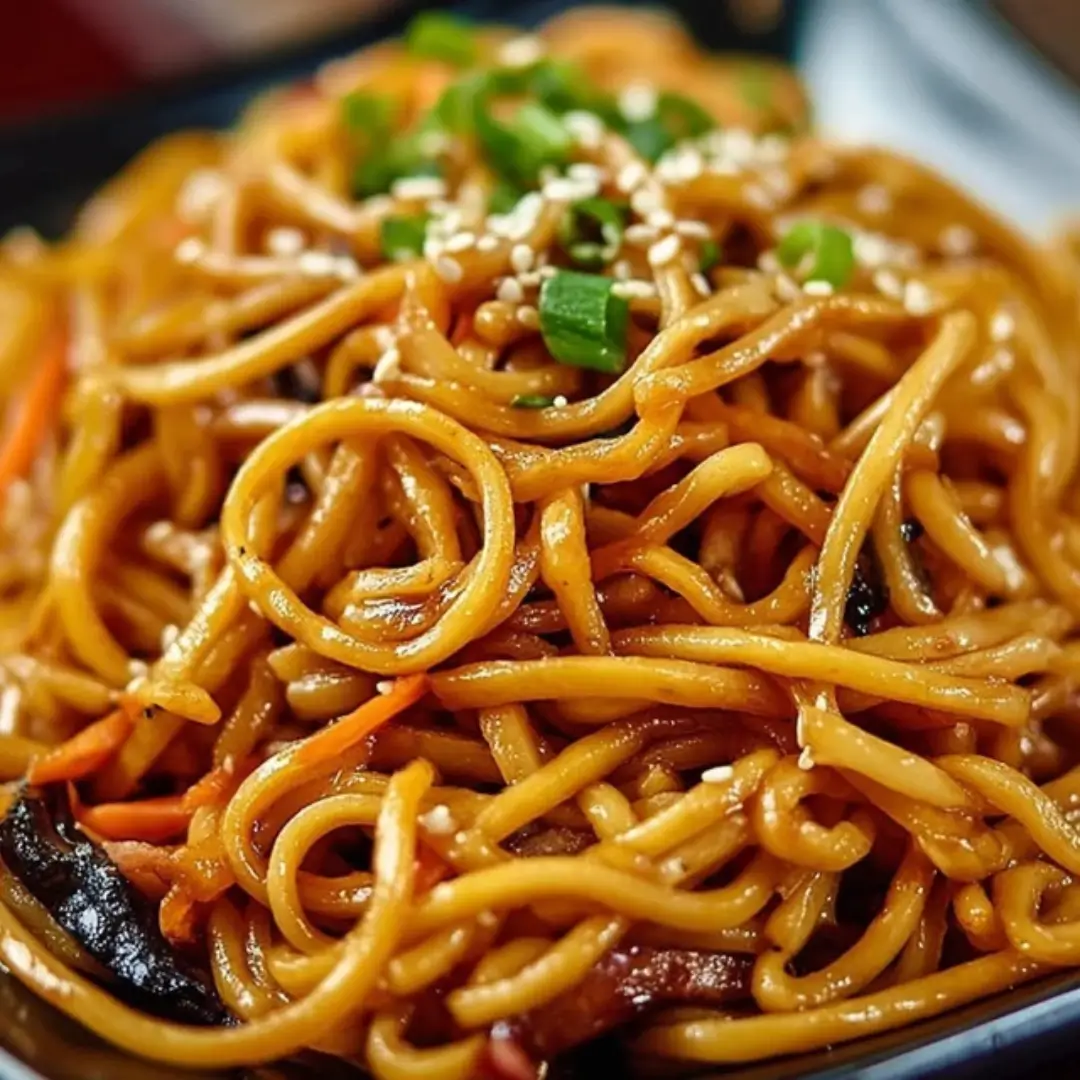
Hibachi Noodles
Ingredients
Method
- Cook noodles according to package instructions. Drain and set aside.
- Heat olive oil in a large skillet or wok over medium-high heat. Add garlic and sauté for 1 minute.
- Add carrots and cabbage. Stir-fry for 3–4 minutes until softened.
- Add butter and stir until melted and coating vegetables.
- Whisk soy sauce, teriyaki sauce, oyster sauce, sesame oil, brown sugar, and black pepper in a bowl.
- Add cooked noodles to the skillet and pour sauce over them.
- Toss until noodles are coated and heated through.
- Add green onions and cook for 1–2 minutes more.
- Serve hot, garnished with sesame seeds.