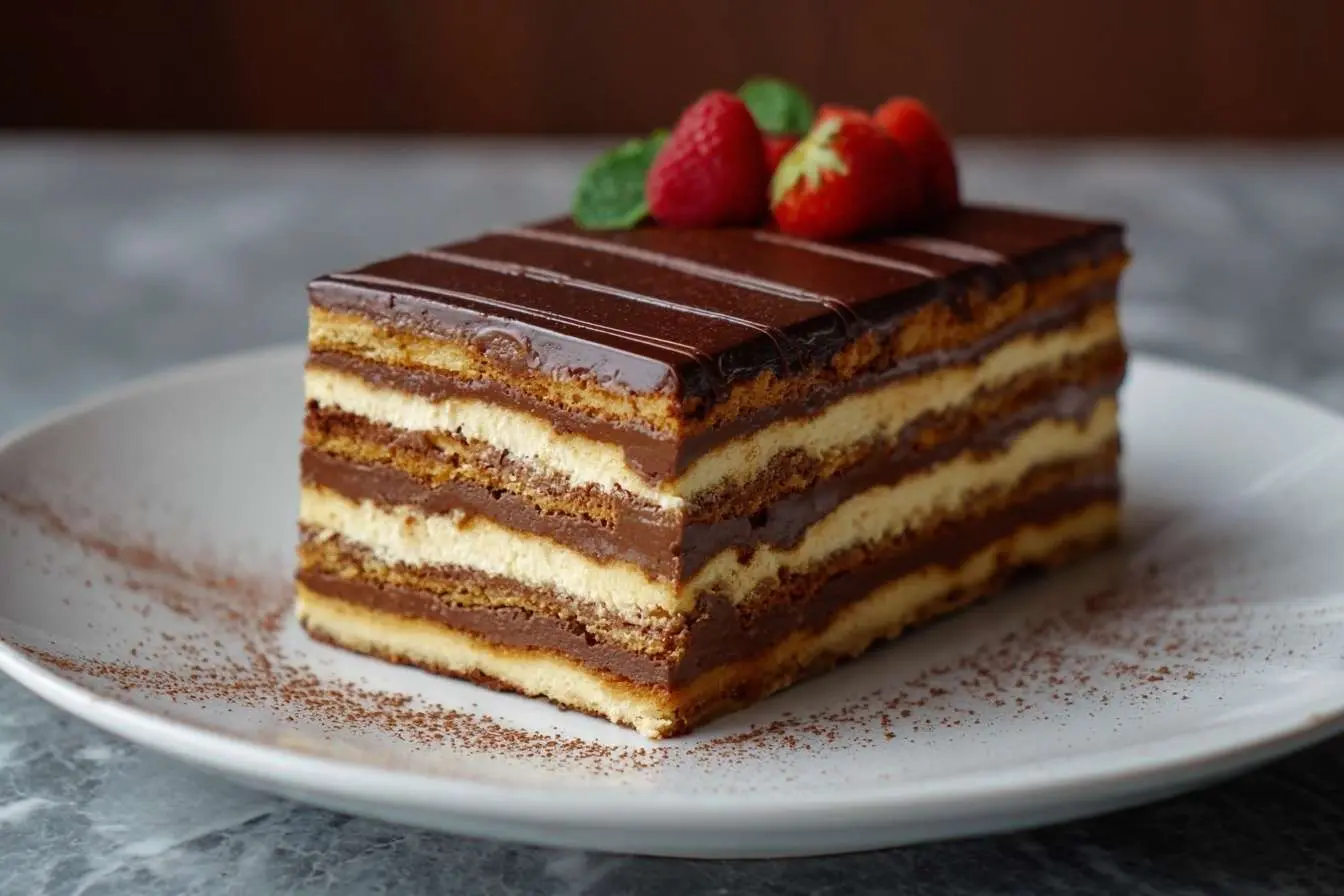
Ingredients
Equipment
Method
Prepare the Almond Joconde Sponge Cake
- Preheat oven to 425°F (220°C). Line one 12x17 inch (30x43 cm) baking sheet with parchment paper.
- In a stand mixer with the whisk attachment, beat egg whites until foamy. Gradually add 1/4 cup (50g) granulated sugar and beat until stiff, glossy peaks form. Transfer to a separate bowl and set aside. Clean the mixer bowl and whisk.
- In the clean mixer bowl, combine whole eggs, almond flour, powdered sugar, and all-purpose flour. Beat on medium-high speed for 5-7 minutes, until light, airy, and tripled in volume.
- Gently fold in the melted butter and vanilla extract into the almond mixture.
- Carefully fold in about one-third of the whipped egg whites into the almond mixture to lighten it, then gently fold in the remaining egg whites until just combined, being careful not to deflate the batter.
- Spread the batter evenly onto the prepared 12x17 inch baking sheet. Bake for 8-10 minutes, or until light golden brown and springy to the touch.
- Immediately invert the cake onto a clean sheet of parchment paper, peel off the baking parchment, and let cool completely on a wire rack. Once cooled, use a ruler and sharp knife to trim the edges, then cut the large cake into three equal 8x12 inch (20x30 cm) rectangles. Set aside.
Prepare the Coffee Syrup
- In a small saucepan, combine brewed coffee and granulated sugar. Bring to a simmer over medium heat, stirring until sugar dissolves completely. Remove from heat and stir in coffee liqueur (if using). Let cool completely.
Prepare the French Coffee Buttercream
- In a stand mixer bowl, whisk egg yolks until pale and thick.
- In a small saucepan, combine granulated sugar and water. Bring to a boil over medium-high heat. Cook without stirring until the syrup reaches 240°F (115°C) on a candy thermometer (soft ball stage).
- With the mixer running on low speed, slowly and carefully pour the hot sugar syrup in a thin stream into the egg yolks. Increase speed to high and beat for 8-10 minutes, until the mixture is very thick, light in color, and the bowl is cool to the touch.
- Reduce mixer speed to medium-low. Add the room temperature butter, one cube at a time, beating well after each addition until fully incorporated. The mixture may look curdled at first, but keep beating until it comes together into a smooth, fluffy buttercream.
- Stir in the dissolved espresso powder and vanilla extract. Beat until fully combined. If the buttercream is too soft, refrigerate for 15-20 minutes, then re-beat. If it’s too firm, let it sit at room temperature for a bit, then re-beat.
Prepare the Chocolate Ganache (First Layer)
- Place chopped dark chocolate in a heatproof bowl.
- Heat heavy cream in a small saucepan until simmering (just before boiling). Pour hot cream over the chocolate. Let sit for 5 minutes, then whisk until smooth and shiny.
- Stir in the unsalted butter until melted and fully incorporated. Let the ganache cool slightly at room temperature until it thickens to a spreadable consistency (about 30-45 minutes), but is not too firm.
Assemble the Opera Cake
- Place one 8x12 inch Joconde cake layer on a serving platter or a sturdy cardboard base. If using a cake ring, place it around the cake layer.
- Brush the cake generously with about one-third of the cooled coffee syrup.
- Spread half of the chocolate ganache evenly over the syrup-soaked cake layer. Chill in the refrigerator for 15 minutes to set the ganache slightly.
- Once chilled, spread half of the coffee buttercream evenly over the ganache layer. Level with an offset spatula.
- Place the second Joconde cake layer on top. Brush generously with another one-third of the coffee syrup.
- Spread the remaining coffee buttercream evenly over the second cake layer. Level with an offset spatula.
- Place the third and final Joconde cake layer on top. Brush generously with the remaining coffee syrup.
- Spread the remaining chocolate ganache evenly over the top of the third cake layer. Level smoothly.
- Refrigerate the entire cake for at least 1-2 hours, or preferably overnight, to allow the layers to set firmly and flavors to meld. This is crucial for clean cutting.
Prepare the Chocolate Glaze (Glaçage Opéra)
- Place chopped dark chocolate in a heatproof bowl.
- In a small saucepan, combine heavy cream, water, granulated sugar, and corn syrup. Bring to a boil over medium-high heat, stirring until sugar is dissolved. Continue to boil for 1-2 minutes.
- Remove from heat and pour the hot syrup mixture over the chopped chocolate. Let sit for 5 minutes, then whisk gently from the center outwards until completely smooth and shiny. Stir in vanilla extract.
- Let the glaze cool slightly until it reaches about 95-100°F (35-38°C). It should be fluid but not hot.
Glaze the Cake
- Remove the chilled cake from the refrigerator. If using a cake ring, carefully warm the sides with a hot towel or blow dryer to release, then remove the ring.
- Place the cake on a wire rack set over a baking sheet (to catch excess glaze).
- Pour the slightly warm chocolate glaze evenly over the top of the cake, starting from the center and working outwards, allowing it to drip down the sides. Use an offset spatula to gently guide the glaze to cover all sides if needed, but avoid overworking it.
- Allow the glaze to set for about 15-30 minutes at room temperature, or briefly in the refrigerator until firm to the touch.
- Trim any excess glaze from the bottom edges using a thin, hot knife.
- For a classic finish, pipe "Opéra" in melted white chocolate or apply edible gold leaf onto the center of the glaze.
Notes
For the cleanest slices, ensure the cake is very cold before cutting. Dip a sharp, thin knife in hot water and wipe clean between each slice. Opera cake is best served chilled. Store leftovers in an airtight container in the refrigerator for up to 3-4 days. The Joconde sponge is delicate; handle with care. Ensure your eggs and butter for the buttercream are at room temperature for the best emulsion. Achieving the correct temperature for the sugar syrup in the buttercream is crucial for stability; a candy thermometer is highly recommended.