Ingredients
Equipment
Method
Prepare the Pasta
- Bring a large pot of heavily salted water to a rolling boil. Add the spaghetti and cook according to package directions until al dente. Before draining, reserve 1.5 cups (360ml) of the starchy pasta water.
Cook the Guanciale
- While the pasta cooks, place the guanciale lardons in a large, cold skillet (preferably non-stick or cast iron). Turn the heat to medium-low and slowly render the fat, stirring occasionally, until the guanciale is golden brown and crispy, about 8-10 minutes. Remove the guanciale with a slotted spoon and set aside on a paper towel-lined plate. Keep the rendered fat in the skillet; you'll need it.
Make the Egg and Cheese Mixture
- In a large heatproof mixing bowl, whisk together the egg yolks, whole egg, finely grated Pecorino Romano cheese, and 1 teaspoon of freshly ground black pepper until thoroughly combined and creamy.
Combine and Emulsify
- Once the pasta is al dente, use tongs to transfer it directly from the pot into the skillet with the rendered guanciale fat (or transfer to a large mixing bowl if your skillet isn't large enough for tossing). Add about 1/4 cup (60ml) of the reserved pasta water to the skillet/bowl and toss the spaghetti to coat. This helps cool the pasta slightly and emulsifies the fat.
- Immediately pour the egg and cheese mixture over the pasta in the skillet/bowl. TOSS VIGOROUSLY and CONTINUOUSLY using tongs, adding small splashes (1-2 tablespoons at a time) of the reserved hot pasta water as needed. The goal is to create a creamy, glossy sauce that coats the spaghetti, not scrambled eggs. Continue tossing for 1-2 minutes until the sauce has thickened and emulsified.
Finish and Serve
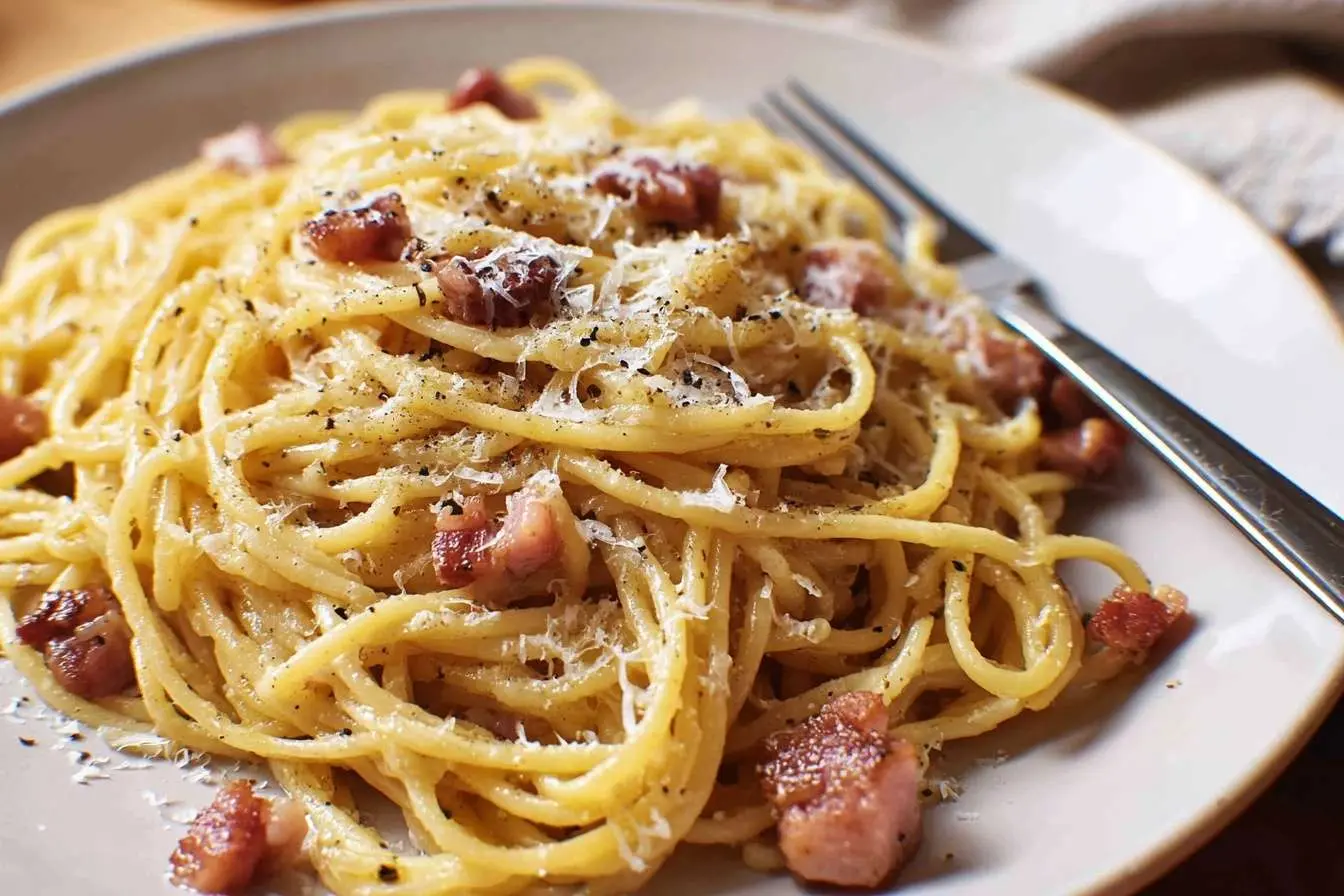
- Add the crispy guanciale back into the spaghetti (reserving a few pieces for garnish if desired). Toss once more. Serve immediately, garnished with extra freshly ground black pepper and additional grated Pecorino Romano cheese.
Notes
Authenticity: True Roman carbonara uses guanciale (cured pork jowl). If you can't find it, use high-quality pancetta. Bacon is not a traditional substitute and will yield a different flavor. Key to Creaminess: The secret is the emulsification of the egg mixture with the hot pasta and starchy pasta water. It's crucial to remove the pan from direct heat when adding the eggs to prevent scrambling. Don't Overcook: Carbonara is best served immediately. The sauce can seize up if allowed to sit too long. No Cream: Traditional carbonara does not contain cream. The richness comes from the eggs, cheese, and guanciale fat.