Ingredients
Equipment
Method
- In a small jar or bowl, combine 30g active sourdough starter, 30g bread flour, and 30g warm water (90-95°F / 32-35°C). Mix well until no dry spots remain. Cover loosely with a lid or plastic wrap and let it sit at room temperature (70-75°F / 21-24°C) for 8-12 hours, or until very active, bubbly, and passes the float test (a small dollop floats in water).
- In a large mixing bowl, combine 300g warm water (90-95°F / 32-35°C) and 100g active levain. Stir briefly to dissolve the levain. Add 400g bread flour and 100g all-purpose flour. Mix with your hands or a dough whisk until just combined and no dry flour remains. Cover the bowl with a plastic shower cap or plastic wrap and let it rest for 30 minutes to 1 hour. This is the autolyse stage.
- After the autolyse, sprinkle 10g fine sea salt over the dough. Add 20g softened unsalted butter. Using wet hands, gently work the salt and butter into the dough. This may feel messy at first, but keep squeezing and folding the dough until the butter and salt are fully incorporated.
- Perform a series of 'slap and fold' or gentle kneading for 5-7 minutes. The dough will become smoother and more elastic. Alternatively, stretch and fold the dough in the bowl for 5-10 minutes until it starts to develop strength. Place the dough back in the bowl and cover.
- Allow the dough to bulk ferment at room temperature (70-75°F / 21-24°C) for 3-5 hours. During this time, perform a series of 'stretch and folds' every 30-45 minutes for the first 2 hours. To perform a stretch and fold: With wet hands, gently grab a portion of the dough from one side, stretch it up, and fold it over the center. Rotate the bowl a quarter turn and repeat this process 3-4 times until all sides have been stretched and folded. After the first 2 hours (approx. 3-4 sets of folds), let the dough rest undisturbed for the remainder of the bulk fermentation. The dough should increase in volume by about 20-30%, be gassy, and feel light.
- Lightly flour your work surface. Gently turn the dough out onto the surface. Using a dough scraper, gently pat it into a rough rectangle. Fold the top third down to the center, then the bottom third up and over the top, creating a log. Gently roll and seal the seams. Cover loosely with plastic wrap and let it rest for 20-30 minutes. This helps the gluten relax.
- Lightly grease your loaf pan (8.5 x 4.5 inches or 9 x 5 inches) with butter or oil. Uncover the dough. Gently flatten the dough into a rectangle again. Fold the top third down to the center. Press down lightly to seal. Fold the bottom third up and over the top, creating a log. Press to seal. Turn the dough seam-side up. Using the palms of your hands, gently roll the log away from you and then back towards you a few times to tighten the surface tension and create a uniform shape that fits your loaf pan. Place the shaped dough seam-side down into the prepared loaf pan.
- **Cold Proof (Recommended for flavor & ease):** Cover the loaf pan tightly with plastic wrap or a plastic bag. Refrigerate for 8-12 hours, or up to 24 hours. OR **Room Temperature Proof:** Cover the loaf pan and let it proof at room temperature (70-75°F / 21-24°C) for 2-4 hours, or until the dough has risen by about 50-75% and feels light and airy when gently poked. It should slowly spring back.
- About 30-45 minutes before baking, preheat your oven to 425°F (218°C) with a rack in the middle position. If you like a slightly crisper crust, you can place a baking steel or stone in the oven to preheat.
- If cold-proofing, take the loaf pan directly from the fridge. Lightly mist the top of the dough with water or brush with an egg wash for a softer, golden crust (optional). Bake at 425°F (218°C) for 20 minutes. Reduce oven temperature to 375°F (190°C) and bake for another 20-25 minutes, or until the crust is golden brown and the internal temperature reaches 200-210°F (93-99°C). If the top is browning too quickly, you can loosely tent it with foil.
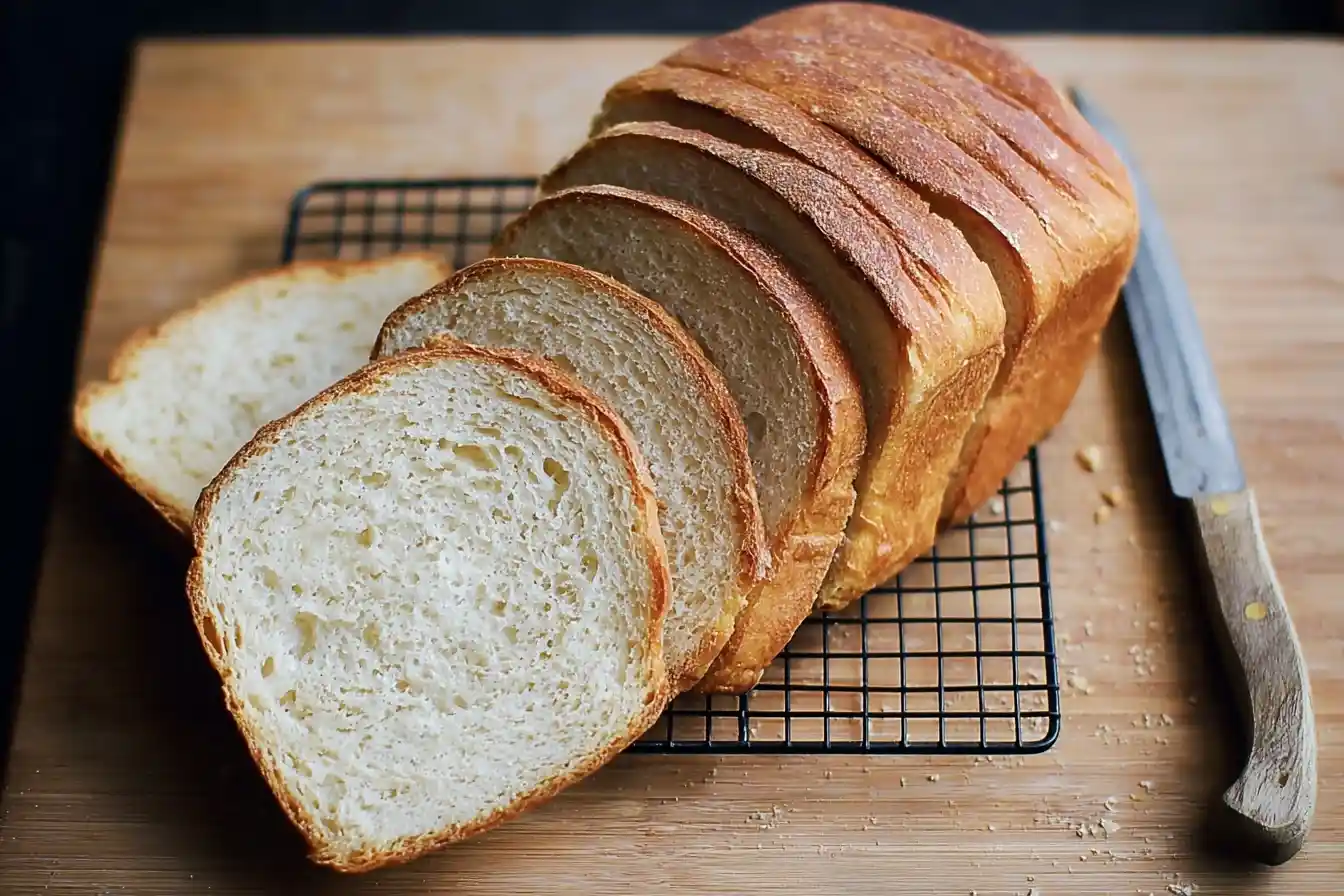
- Remove the loaf from the oven and immediately turn it out onto a wire cooling rack. Allow it to cool completely for at least 1-2 hours before slicing. Slicing warm sourdough bread can lead to a gummy interior.
Notes
Total active time for this recipe (prep + cook) is 70 minutes. However, please note that sourdough baking involves significant passive time for levain building (8-12 hours), autolyse (30-60 minutes), bulk fermentation (3-5 hours), and final proofing (2-4 hours at room temperature or 8-24 hours cold proof in the fridge). Plan accordingly!
**Storage:** Store leftover bread at room temperature in an airtight container or bread box for 3-4 days. For longer storage, slice the cooled loaf and freeze in a freezer-safe bag for up to 3 months. Toast slices directly from frozen.
**Troubleshooting:** If your dough feels too sticky, try reducing the water slightly in your next bake. If it's too stiff, add a little more water. Humidity and flour absorption vary.
**Starter Activity:** An active starter is key! Ensure your starter is robust, bubbly, and doubles in size within 4-6 hours after feeding before preparing the levain.