
There’s something truly magical about a classic homemade turkey gravy recipe. It’s the kind of rich, velvety sauce that transforms a simple meal into a feast, coating everything it touches with savory warmth. For me, it evokes memories of bustling holiday kitchens, the air thick with anticipation, and the comforting clatter of pots and pans.
I can still picture my grandmother, apron dusted with flour, patiently whisking over the stove, turning humble pan drippings into liquid gold. It was in those moments, watching her artistry, that my own love for creating delicious things in the kitchen truly began. This isn’t just a sauce; it’s a hug in a bowl, a taste of tradition.
This simple turkey gravy recipe is not only incredibly easy to master, but it also brings an unparalleled depth of flavor to your table, making every meal feel special. My top tip? Don’t rush the roux; that golden base is the secret to rich, nutty perfection!
What You Need to Make This Recipe
This classic turkey gravy recipe transforms pan drippings, butter, and flour into a rich roux. Add turkey stock and fresh herbs like thyme and sage for depth. My grandmother always said the simplest ingredients, handled with love, create the most magical flavors! Full details are in the recipe card below.
How to Make turkey gravy recipe
Crafting this easy turkey gravy recipe is simpler than it seems! Begin by preparing your turkey drippings. Next, create a golden roux from butter and flour. Slowly whisk in the stock and drippings to achieve a perfect, silken texture. A final seasoning and fresh herbs complete this irresistible sauce. So satisfying!
![Pouring {{ $('Fetch Recipe Data').first().json["Main Keyword"] }} into a white gravy boat.](https://simplrecipes.com/wp-content/uploads/2026/04/turkey-gravy-recipe-.webp)
Classic Homemade Turkey Gravy
Ingredients
Equipment
Method
- After removing your turkey from the roasting pan, carefully pour all the pan drippings into a fat separator. Allow the fat to separate and rise to the top (this usually takes about 5-10 minutes).
- Pour the defatted turkey juices (about 2 cups) into a separate bowl, leaving the fat in the separator. If you don’t have enough defatted drippings, supplement with additional turkey or chicken stock to reach 2 cups. Skim 1/4 cup of the turkey fat from the separator and set aside.
- For an extra smooth gravy, strain the defatted pan drippings through a fine-mesh sieve into the bowl to remove any small solids.
- In a medium saucepan, melt the 1/4 cup of reserved turkey fat and 1/4 cup of unsalted butter over medium heat.
- Once melted and shimmering, whisk in the all-purpose flour continuously for 2-3 minutes until a light golden-brown paste (roux) forms. Cook out the raw flour taste, stirring constantly.
- Gradually whisk in the 4 cups of turkey or chicken stock into the roux, a little at a time, ensuring no lumps form. Continue whisking until the mixture is smooth.
- Slowly whisk in the 2 cups of strained, defatted turkey pan drippings. Bring the mixture to a simmer, whisking occasionally.
- Let the gravy simmer gently for 5-10 minutes, or until it thickens to your desired consistency. It should coat the back of a spoon.
- Stir in the dried thyme (if using) and freshly ground black pepper. Taste the gravy and add salt as needed. Remember that drippings can be salty, so season carefully.
- If using, stir in the fresh sage and parsley just before serving. Serve hot and enjoy over your turkey, mashed potatoes, or stuffing!
Notes
Pro Tips for Making This turkey gravy recipe
Making a perfect turkey gravy recipe can elevate any meal, and I’ve learned a few tricks over the years to ensure yours is always a triumph.
My Secret Trick: I always strain my pan drippings through a fine-mesh sieve before adding them to the roux. This ensures your gravy is wonderfully smooth and free of any lumps or bits, giving it that restaurant-quality finish that everyone will rave about.
For an extra layer of flavor in your turkey gravy, I recommend using a good quality, low-sodium turkey or chicken stock. This allows you to control the salt content precisely and really lets the natural flavors of the turkey drippings shine through.
When making your roux, keep the heat at medium-low and whisk continuously for 2-3 minutes until it’s a lovely golden brown. This develops a beautiful nutty flavor without burning, which is crucial for the overall taste of your finished turkey gravy recipe.
Don’t be afraid to adjust seasonings! Taste your gravy often as it simmers. A pinch more salt, a grind of fresh pepper, or a little extra fresh sage can make all the difference, transforming good gravy into truly unforgettable gravy.
Fun Variations for turkey gravy recipe
While this classic turkey gravy recipe is perfect as is, I always encourage a little kitchen creativity! Here are a few ways to add your own special touch.
Herbaceous Twists
My friend always asks me to add a little fresh rosemary along with the thyme and sage. You could also try a hint of marjoram for a slightly sweeter, earthy note. Just remember to chop them finely for an even distribution of flavor in your delicious turkey gravy.
Richer Flavors
For an even deeper, more complex turkey gravy, consider adding a splash of dry white wine or sherry when deglazing your pan. Let it simmer for a minute to cook off the alcohol before incorporating your stock. It adds a wonderful restaurant-quality depth that’s truly special.
Spicy Kick
If you enjoy a little heat, a tiny pinch of cayenne pepper or a dash of your favorite hot sauce can add an unexpected and delightful zing to your turkey gravy recipe. Start with just a touch and taste, adjusting until it’s just right for your palate! It’s amazing how a little spice can awaken the senses.
What to Serve With turkey gravy recipe
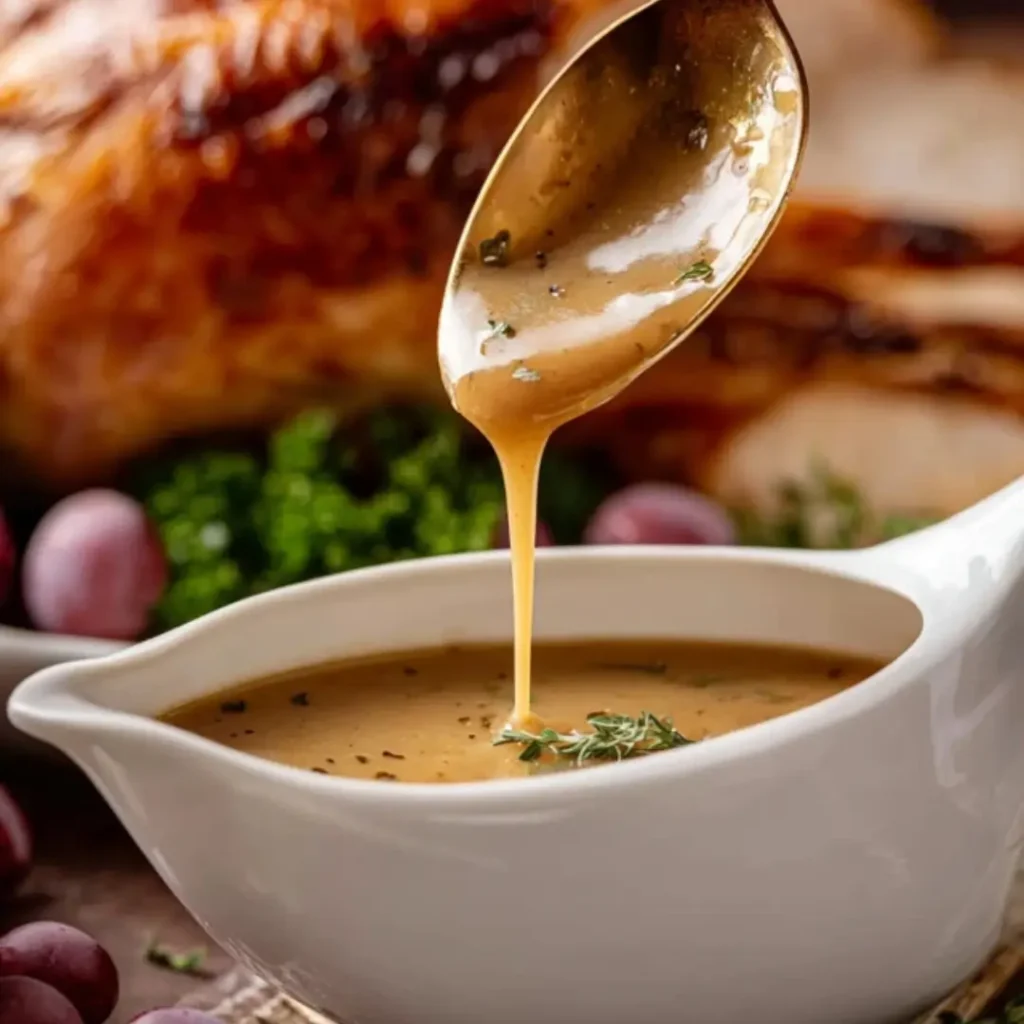
This luscious turkey gravy recipe isn’t just for turkey dinner! It’s a versatile star that can elevate so many dishes, turning an ordinary meal into something extraordinary.
I love serving this rich gravy generously drizzled over fluffy mashed potatoes – it’s a match made in heaven! My grandmother always said a good gravy makes everything taste better, and she was right.
It’s also wonderful spooned over roasted chicken, pork chops, or even hearty meatloaf. For a simpler meal, try it with a warm slice of cornbread or biscuits for a comforting, satisfying treat. My dad absolutely adores it over his crispy roasted vegetables, adding an extra layer of savory delight.
For a quick serving idea, have a small pitcher of this warm turkey gravy ready for unexpected guests or simply to make a weeknight meal feel a little more special.
How to Store turkey gravy recipe
Keeping your homemade turkey gravy fresh ensures you can savor its comforting flavor for days to come. Properly storing this delicious turkey gravy recipe is super easy!
Fridge Storage
Once your gravy has cooled completely, transfer it to an airtight container. It will keep beautifully in the refrigerator for up to 3-4 days. I always make a little extra, knowing it’ll be perfect for leftovers!
Freezer Tips
For longer storage, homemade turkey gravy freezes wonderfully! Pour the cooled gravy into freezer-safe containers or even ice cube trays for individual portions. It can be frozen for up to 3 months. When ready to use, thaw in the fridge overnight.
Reheating Methods
To reheat, gently warm the gravy in a saucepan over medium-low heat, whisking frequently. If it’s too thick, add a splash of turkey or chicken stock (or even water) until it reaches your desired consistency. My personal tip? A fresh grind of black pepper after reheating brings it back to life!
Nutritional Benefits
This comforting turkey gravy recipe, crafted with natural pan drippings and rich stock, adds savory depth to meals. It helps enhance the absorption of fat-soluble vitamins from accompanying dishes, proving that even delicious treats can offer simple, satisfying nourishment. A little joy and goodness!
FAQs
Can I make turkey gravy without drippings?
Absolutely! You can still create a delicious turkey gravy recipe using turkey or chicken stock as your base. Simply make a roux with butter and flour, then gradually whisk in the stock, adding a few drops of browning sauce for color and depth.
How can I thicken my gravy if it’s too thin?
If your turkey gravy recipe is too thin, create a slurry with a tablespoon of cornstarch mixed with an equal amount of cold water. Slowly whisk this into your simmering gravy until it reaches your desired thickness. A little goes a long way!
How long does homemade turkey gravy last?
Homemade turkey gravy, when stored properly in an airtight container in the refrigerator, will last for 3 to 4 days. For longer storage, it freezes beautifully for up to 3 months, ready to be enjoyed whenever a craving strikes!
Can I freeze leftover turkey gravy?
Yes, you certainly can! Leftover turkey gravy freezes wonderfully. Allow it to cool completely, then pour into freezer-safe containers or even ice cube trays. Thaw overnight in the refrigerator and gently reheat, adding a splash of stock if needed.
Conclusion
And there you have it, my dears! This classic turkey gravy recipe isn’t just a side dish; it’s a testament to how simple ingredients, combined with a little love, can create something truly extraordinary. I hope you feel inspired to bring this comforting sauce to your own table, knowing that each whisk and pour is a step towards creating delicious memories. Happy baking, and happy feasting!